Back
Product Management Product Design UX / Visual Design Launch Strategy
Product Case Study · Lee Jones · Undeferred Interactive

Honey
Hop

I led the end-to-end design and product management of a strategy board game — from initial concept and user research through manufacturing, Kickstarter launch, and community building. 18 months. 4 teammates. One shipped product.

$10,244
Raised
204%
Funded
4 days
To goal
135
Backers
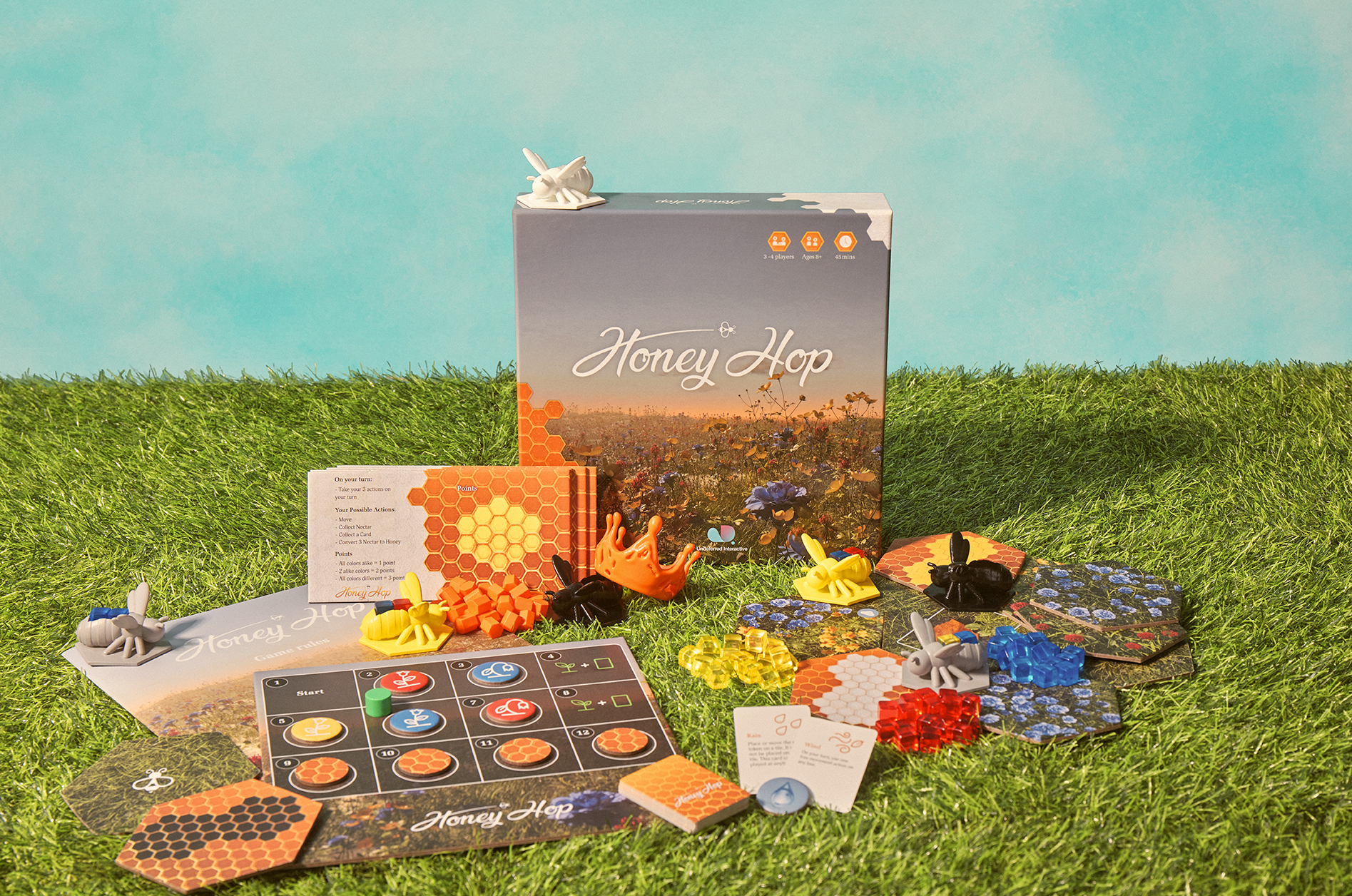
Honey Hop box art
Strategy
Genre
3–4 Players
Audience
~45 min
Play Time
Ages 8+
Age Range
18 months
Dev Cycle
$5,000
Funding Goal

Founder, Product Lead & Designer

As a co-founder of Undeferred Interactive, I owned product vision, UX and visual design, project roadmap, cross-functional team coordination, and go-to-market strategy — simultaneously.

Shipping a physical product through crowdfunding is a full product management challenge: it requires user research, iterative design, vendor management, deadline accountability, and community-led launch execution. The skills transfer directly.

Team

Product Design & PM: Lee Jones
Playtest and game development Jeff Alton
Art and Design Jamil Green
Playtest and logistics Kevin Kung

Honey Hop components

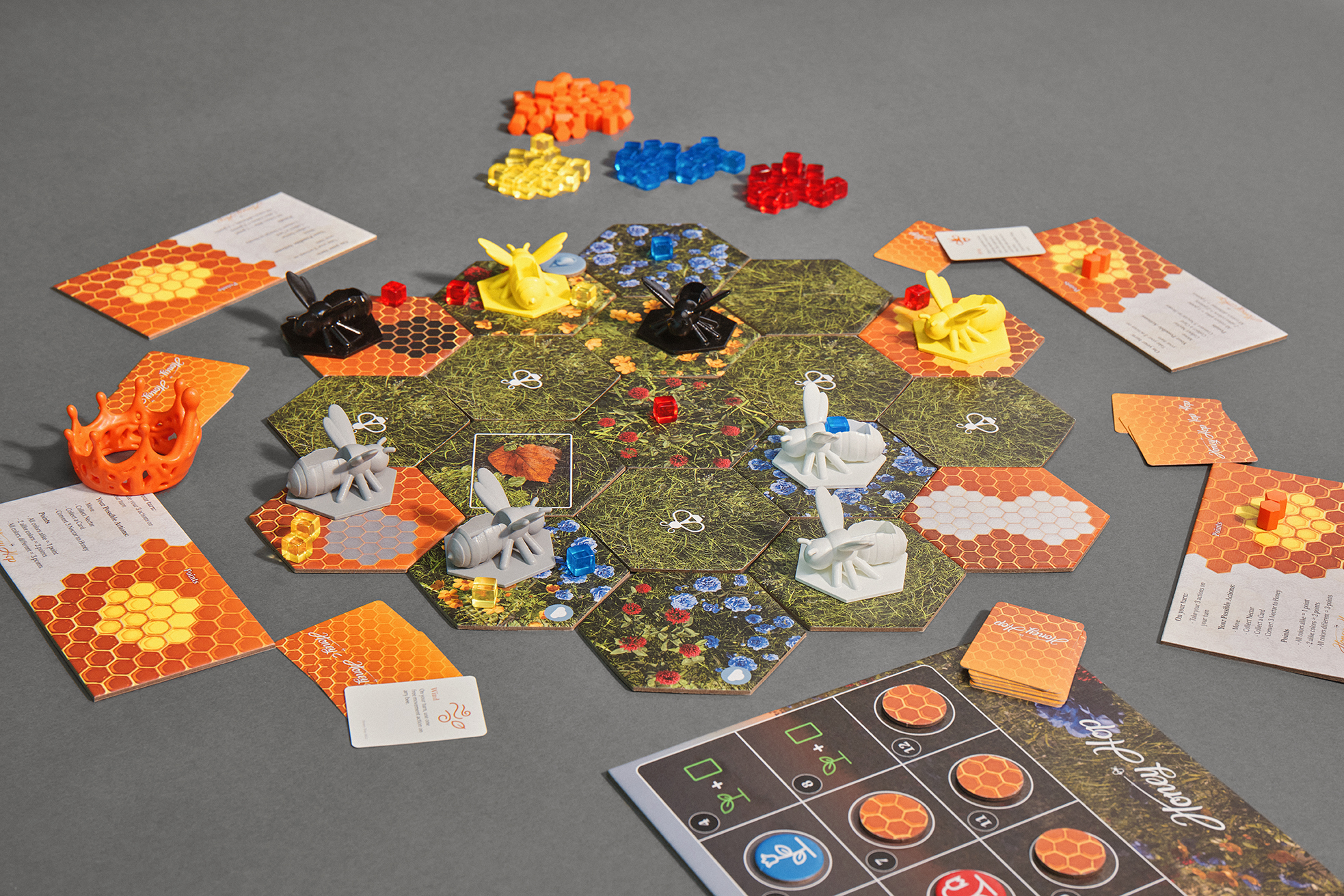
Final game components and board

🎯
Product Management
Defined scope and milestones, managed manufacturing vendors, tracked dependencies, and kept a 4-person team aligned across an 18-month timeline.
✏️
Product & Game Design
Designed core mechanics and player interaction systems. Validated every decision through structured playtesting before committing to production.
🎨
Visual & UX Design
Directed all visual identity, component design, box art, rulebook layout, and Kickstarter campaign page — end-to-end brand and experience ownership.
🚀
Launch Strategy
Built the pre-launch community funnel, managed the convention circuit, and orchestrated a multi-channel Kickstarter launch that hit 204% of goal.
From Blank Page to Shipped Product

I structured the design process around the same principles used in digital product development — starting with user needs and validating before committing resources.

01
Concept
Defined the core loop: collect resources and manage risk — through a simple, teachable bumping mechanic.
02
Prototype
Built paper prototypes, ran internal tests, documented every rule change. Version-controlled design decisions across 10+ iterations.
03
Validate
Ran structured playtest sessions with external users as well as at two national conventions before manufacturing lock-in.
04
Ship
Finalized manufacturing specs, directed all visual production, launched on Kickstarter. Reached goal in 4 days.
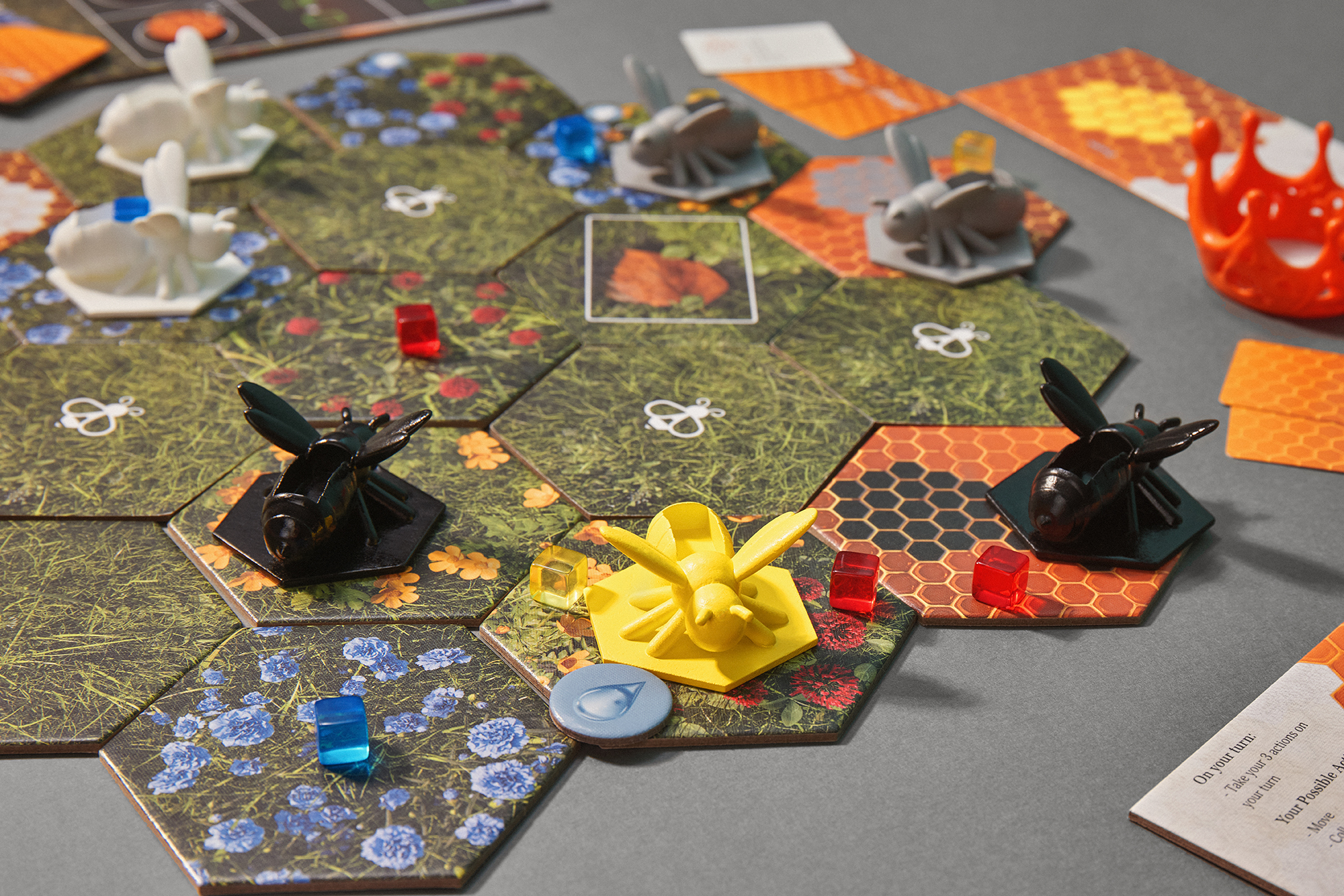
Game component layout

Final board and component layout

Key Design Decisions

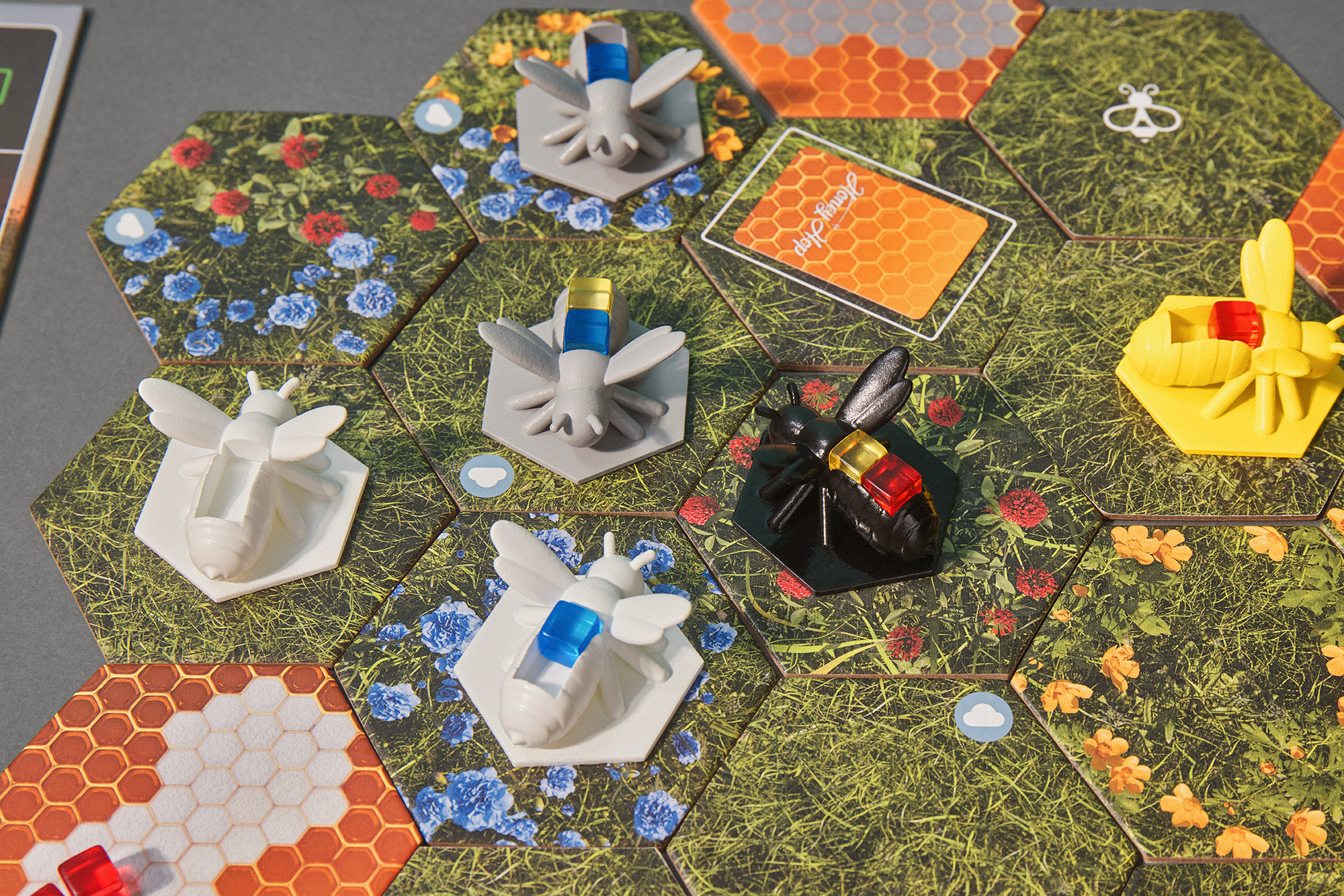
The "bumping" mechanic emerged from a specific design decision: the game had to work equally well for a first-time player and an experienced gamer. Through the bumping mechanic, the game introduced dynamic gameplay that actively reshaped the board in unexpected ways. I tested dozens of rule variations before landing on the version that shipped — each iteration driven by observed player behavior, not assumption.

Visual design was treated as a product decision, not decoration. The palette, illustrated board, and custom component shapes were chosen to signal approachability to families while maintaining shelf presence alongside premium hobby games.

Component layout was designed for cognitive ease — minimizing the time players spend looking away from the board, and making game state readable at a glance.

Convention playtesting

Validated with real users before manufacturing was committed

Live playtests at Geekway to the West (St. Louis) and Dice Tower East (Orlando) surfaced real friction points that shaped the final product.

Designing From Evidence, Not Instinct

User research wasn't a formality — it was the engine of the design process. I structured every testing session to generate actionable signal, not just good feelings about the product.

Research Method

Playtesting

Ran structured play sessions that were observed and followed by a structured player debrief.

  • Recruited casual, enthusiast, and first-time players
  • Observed without intervening — let confusion surface naturally
  • Timed average turns and overall play duration
  • Collected verbal feedback on moments of delight and friction
What Changed Because of Research

Research-Driven Design Decisions

Feedback drove meaningful design pivots — not cosmetic changes. Real user behavior shaped the final product:

  • Simplified the turn structure
  • Redesigned component iconography after repeated first-timer confusion
  • Adjusted win conditions after 3-player sessions produced less satisfying outcomes
  • Rewrote the rulebook for plain-language clarity based on observed table confusion
Prototype Validation

Pre-Manufacturing Review

Before committing to production, I led the review of physical test prints — checking component quality, fit, and usability before tooling costs were locked.

  • Validated component dimensions and board readability at full scale
  • Identified and corrected a color contrast issue on player tokens
  • Confirmed rulebook layout legibility at print size
Market Research

Competitive Landscape Analysis

Before designing the product, I analyzed the competitive space to identify white space and set a differentiated position in the Kickstarter board game market.

  • Identified an underserved niche: 3–4 player direct-conflict games at 45 min runtime
  • Found nature/foraging themes trending on Kickstarter in 2022–23
  • Benchmarked pricing and goals across 20+ comparable campaigns

Running the Product Roadmap

Shipping a physical product to Kickstarter backers requires the same PM discipline as shipping software — dependency mapping, vendor management, deadline accountability, and team alignment across workstreams.

I owned the product roadmap from concept through post-campaign fulfillment, coordinating design, manufacturing, marketing, and community workstreams simultaneously across an 18-month cycle.

PM Deliverables

The concrete PM artifacts I owned — the same types of deliverables expected in a product role.

🗺️
Product Roadmap
18-month roadmap across design, production, and go-to-market. Tracked dependencies between manufacturing timelines and campaign launch windows.
💰
Financial Model & Pricing Strategy
Built the cost model underpinning the $5,000 goal — factoring in per-unit manufacturing, fulfillment, Kickstarter fees (~10%), and reward tier margins.
🏭
Vendor & Manufacturing Management
Sourced and managed production partners. Defined quality standards, reviewed test prints, and negotiated delivery timelines aligned to the launch date.
📣
Go-to-Market Plan
Pre-launch community strategy: convention presence, email list growth, social cadence, and a launch window tied to Dice Tower East for earned media.

18 Months from Concept to Campaign

Every milestone was tracked and managed across design, manufacturing, and go-to-market workstreams simultaneously.

Early 2022
Company Founded — Vision & Scope Set
Co-founded Undeferred Interactive. Defined the product mission, scoped the first game, and established team roles and working agreements.
PMProduct Design
2022 – Early 2023
Design Sprints & Iteration
Led iterative design cycles across mechanics, visual design, and component spec. Managed internal playtests and tracked design decisions with version documentation.
Product DesignUXPM
Mid 2023
Prototype Review & Manufacturing Brief
Reviewed physical test prints against spec. Briefed manufacturing partners, built the cost model that set the $5K goal, and finalized component requirements.
PMProduct Design
May 2023
Geekway to the West — User Validation
Planned and staffed the convention. Ran structured playtest sessions and synthesized feedback into a final round of pre-launch design changes.
ResearchMarketingPM
July 2023
Kickstarter Launch at Dice Tower East
Coordinated simultaneous Kickstarter launch and convention presence. Hit $5K goal in 4 days. Closed at $10,244 — 204% funded.
LaunchPM

Who I Built This With

Leading a team — each with distinct strengths — required clear ownership, proactive communication, and shared alignment on goals.

Lee Jones
Lee Jones
Product Design & PM
Jeff Alton
Jeff Alton
Playtest and game development
Jamil Green
Jamil Green
Art and Design
Kevin Kung
Kevin Kung
Playtest and logistics

The Results

The campaign validated both product design and go-to-market strategy — hitting target metrics across funding, community, and timeline management.

$10,244
Total raised
Against a $5K goal modeled from a bottom-up manufacturing cost analysis.
204%
Of goal funded
Exceeded target by 2x — a direct signal of product-market fit and effective pre-launch strategy.
4 days
To reach goal
Pre-launch community and convention presence drove strong Day 1–4 momentum.
135
Backers
A community built from scratch through research-informed design and authentic storytelling.

What This Project Proves

Evidence of the core skills that transfer directly into a product design or PM role — the ability to take a complex product from 0 to 1 with real users, real constraints, and real outcomes.

Product Management

  • Owned full product lifecycle from 0 → 1 over 18 months
  • Led and aligned a cross-functional team of 4 co-founders
  • Built financial models and cost-benefit analyses to set funding targets
  • Managed external vendor relationships and manufacturing timelines
  • Defined success metrics and tracked performance in real time
  • Created and maintained a multi-phase roadmap with dependencies

Product & UX Design

  • Led full design process: discovery → concept → prototype → validate → ship
  • Designed core product mechanics grounded in user mental models
  • Balanced accessibility (ages 8+) with strategic depth for enthusiasts
  • Directed visual identity, component design, and full brand system
  • Made data-driven design decisions from structured user research

Research & Validation

  • Conducted competitive analysis across 20+ comparable products
  • Designed structured observation sessions with real external users
  • Identified and resolved friction points before manufacturing lock-in
  • Used timing data and satisfaction signals to drive design pivots

Go-to-Market & Launch

  • Developed and executed a multi-channel pre-launch community strategy
  • Coordinated simultaneous launch event and convention presence
  • Managed live campaign communications and backer engagement
  • Designed reward tier structure and campaign page narrative

"Our dream is to bring together determined, curious, passionate individuals to create memorable interactive experiences that inform and ignite a passion for learning through play."

— Undeferred Interactive Mission Statement

What I'd Do Differently

A good product manager doesn't just ship — they reflect. Here's an honest assessment of what worked and what I'd change with more resources or experience.

What Worked

  • A conservative, modeled funding goal de-risked the launch and built backer confidence
  • Convention playtesting generated richer qualitative data than any survey could
  • A formal user testing screener to diversify player profiles in research sessions
  • Tying the launch to a major convention created a natural earned-media moment
  • Pre-launch list building drove strong Day 1 funding velocity
  • Transparent behind-the-scenes content built genuine trust with early supporters

What I'd Improve

  • Earlier outreach to board game content creators and press
  • More structured reward tiers to raise average pledge size
  • A BoardGameGeek listing established 3+ months before launch
  • Cleaner post-campaign fulfillment update cadence for backer communication

Interested in Working Together?

Honey Hop is one case study. I bring this same end-to-end design and product thinking to every challenge I take on.

View Kickstarter Campaign Visit Undeferred